
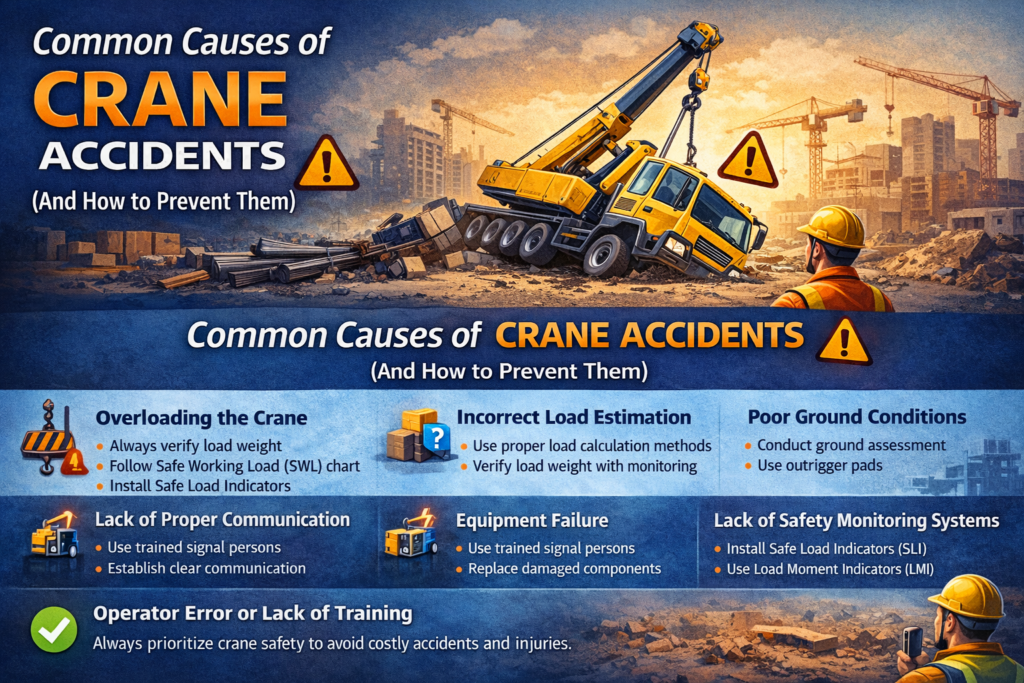
Common Causes of Crane Accidents (And How to Prevent Them)
Cranes play a vital role in industries such as construction, shipyards, logistics, ports, and heavy engineering. They are designed to lift and move extremely heavy loads efficiently. However, when lifting operations are not properly planned or monitored, crane accidents can occur, often resulting in equipment damage, project delays, and serious injuries.
Many crane accidents happen due to preventable factors such as overloading, poor communication, or lack of proper safety systems. Understanding the common causes of crane accidents can help organizations implement the right safety measures and avoid costly incidents.
Below are some of the most common causes of crane accidents and practical ways to prevent them.
1. Overloading the Crane
One of the most common causes of crane accidents is lifting loads beyond the crane’s safe capacity. When a crane is overloaded, it can become unstable and may tip over or suffer structural failure.
How to Prevent It
- Always verify the load weight before lifting.
- Follow the crane’s Safe Working Load (SWL)
- Install a Safe Load Indicator (SLI) or Load Moment Indicator (LMI) to monitor the load in real time.
Modern load monitoring systems provide visual and audible warnings when the crane approaches unsafe limits, helping operators avoid dangerous situations.
2. Incorrect Load Estimation
Sometimes operators or supervisors underestimate the weight of a load. This miscalculation can easily lead to overloading and loss of crane stability.
How to Prevent It
- Use proper load calculation methods.
- Check material density and dimensions before lifting.
- Use digital load monitoring systems to verify load weight during operations.
Accurate load estimation is essential for maintaining safe lifting operations.
3. Poor Ground Conditions
Crane stability heavily depends on the ground conditions where the crane is positioned. Soft soil, uneven surfaces, or unstable ground can cause cranes to tilt or collapse.
How to Prevent It
- Conduct a ground assessment before crane setup.
- Use outrigger pads and proper support structures.
- Avoid operating cranes on unstable or sloped surfaces.
Proper site preparation is a key factor in crane safety.
4. Lack of Proper Communication
During lifting operations, clear communication between the crane operator, signalman, and rigging crew is critical. Miscommunication can lead to incorrect movements and dangerous situations.
How to Prevent It
- Use trained signal persons.
- Establish clear hand signals or radio communication.
- Conduct a pre-lift briefing to ensure everyone understands the lifting plan.
Effective communication reduces confusion and improves operational safety.
5. Equipment Failure or Poor Maintenance
Crane components such as wire ropes, hooks, hydraulic systems, and brakes must be regularly inspected and maintained. Equipment failure during lifting can lead to sudden load drops or mechanical collapse.
How to Prevent It
- Perform regular inspections and preventive maintenance.
- Replace worn or damaged components immediately.
- Follow manufacturer maintenance guidelines.
Routine inspections significantly reduce the risk of mechanical failure.
6. Lack of Safety Monitoring Systems
Operating cranes without proper safety monitoring systems increases the risk of accidents. Without real-time data, operators may not realize when the crane is approaching unsafe conditions.
How to Prevent It
- Install Safe Load Indicators (SLI) or Load Moment Indicators (LMI).
- Use systems with audible and visual warning alarms.
- Monitor lifting parameters such as load weight, radius, and crane capacity.
Advanced monitoring systems help operators make safer decisions during lifting operations.
7. Operator Error or Lack of Training
Crane operators must have the skills, experience, and proper training required to handle complex lifting operations. Inexperienced operators may misjudge load conditions or crane capacity.
How to Prevent It
- Ensure operators receive professional training and certification.
- Provide regular safety refresher courses.
- Follow standard operating procedures during lifting operations.
Skilled operators are one of the most important factors in crane safety.
The Role of Technology in Preventing Crane Accidents
Modern crane safety technology plays a crucial role in preventing accidents. Systems such as Safe Load Indicators and Load Moment Indicators provide real-time information about the crane’s operating conditions.
These systems help operators monitor:
- Load weight
- Crane capacity utilization
- Operating radius
- Overload conditions
With accurate monitoring and warning systems, crane operators can take corrective action before a dangerous situation occurs.
Supporting Safer Lifting Operations
Companies like Load Sense Solutions provide advanced crane safety and load monitoring systems designed to improve lifting safety and operational efficiency.
By installing reliable load monitoring technology, organizations can:
- Reduce crane accidents
- Protect workers and equipment
- Improve operational safety standards
- Comply with industry safety regulations
Conclusion
Crane accidents often occur due to preventable mistakes such as overloading, poor ground conditions, lack of communication, and insufficient monitoring systems. By understanding these risks and implementing proper safety measures, organizations can significantly reduce accidents during lifting operations.
Using modern safety technology, following proper lifting procedures, and ensuring operator training are key steps toward safer and more efficient crane operations.